
Overview
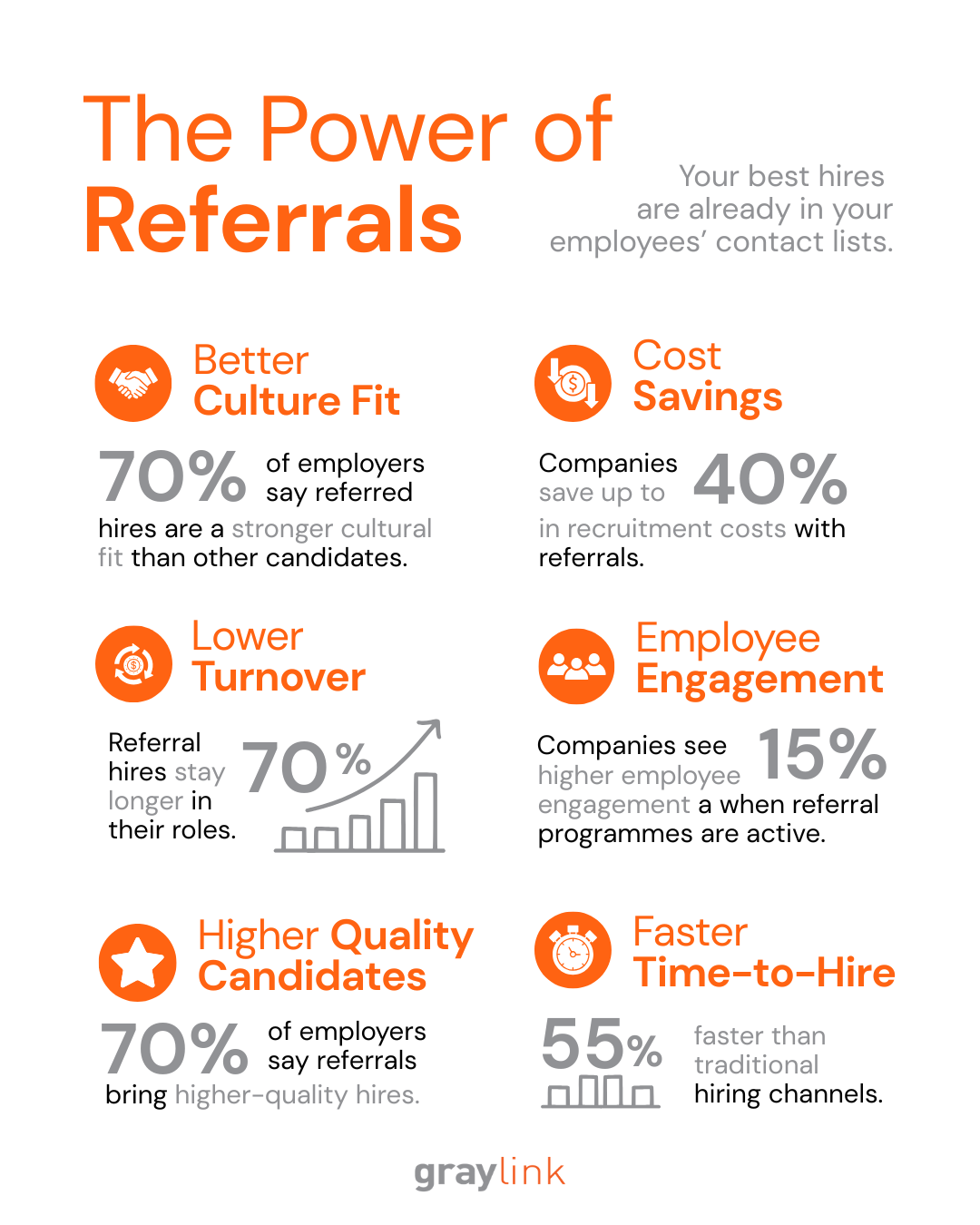
- Employee referrals produce hires who stay longer. Research across nine large firms found referred workers were 10 to 30% less likely to quit.
- Most referral programmes fail on admin, not motivation. Referring takes too much effort and rewards arrive late.
- A bigger referral bonus is a weak fix. In a randomised trial, even a bonus worth 40% of monthly salary kept referrals at about 5% of hires.
- A referral chatbot on WhatsApp removes the admin: sharing, applying, tracking and reward processing happen in one conversation.
- Judge the programme on participation, conversion, time to hire and retention, not on referral volume alone.
Why do employee referrals produce better hires?
Referred candidates arrive pre-screened by someone who understands both the job and the person. They tend to fit the role better and stay longer.
The strongest evidence comes from a study in the Quarterly Journal of Economics that analysed personnel data from nine large firms in call centres, trucking and high-tech. Referred workers were 10 to 30% less likely to quit. Their everyday productivity matched other hires, but they did better on high-impact measures, with fewer truck accidents and more patents.
The researchers traced the advantage to job fit, not to referred people being generally more capable. They also found that employees refer people like themselves, including in how they behave at work. In practice, that makes your strongest performers your most valuable referrers, so ask them first.
Why do most referral programmes fail?
Most referral programmes fail on administration. Employees are usually willing to refer, but the process makes it slow to do and hard to trust.
The same failure points come up again and again:
- Referrals sent by email or intranet form that nobody acknowledges
- No way for the referrer to see where their contact is in the process
- Disputes over who referred whom
- Rewards paid months late, or not at all
Every late or missing reward makes the next referral less likely. The problem is sharper in non-desk workforces across retail, mining, logistics and manufacturing, where many employees have no company email or intranet login. For these teams, a referral process that depends on a desktop simply never reaches most of the people it is meant for. Graylink covers this in more detail on its non-desk recruitment page.
Will a bigger referral bonus increase referrals?
Only slightly, and it can lower referral quality. A modest reward paid reliably does more than a large one paid late.
The clearest test is a randomised controlled trial by Friebel, Heinz, Hoffman and Zubanov, later published in the Journal of Political Economy. The researchers introduced referral programmes in randomly selected stores of a large European grocery chain, ran them for 13 months and compared the results with control stores. Some stores offered no bonus. Others offered bonuses of up to 40% of monthly salary.
The findings:
- Larger bonuses produced more referrals, but only marginally. Even at the top bonus, referrals made up about 5% of hires.
- As bonuses rose, the retention advantage of referred hires shrank.
- Telling staff that referrals were welcome, with no bonus attached, produced no referrals at all.
- Stores with a programme saw staff attrition fall by about 15%, mostly because existing employees stayed longer.
graylink's view: a bonus is necessary, but its size is not the lever. Set a fair fixed amount, tie it to a clear milestone such as the end of probation and pay it on time. Put the rest of the effort into making referring effortless.
How does a referral chatbot work?
A referral chatbot runs the whole programme inside a mobile conversation. Sharing, applying and tracking happen without forms, spreadsheets or manual capture.
A typical flow:
- HR launches a referral campaign to staff via WhatsApp, SMS or mobile web.
- An employee forwards a unique link to someone they would vouch for.
- The candidate opens the chat and completes a short application.
- The chatbot records who referred whom and sends the application straight into the applicant tracking system.
- The referrer receives status updates, and the reward is triggered once the agreed milestone is met.
Because it runs on WhatsApp, staff refer from the same app they already use every day. The same logic drives WhatsApp recruiting for candidate engagement.
This is a structured, rules-based conversation, which makes it a job for a chatbot rather than an autonomous AI agent. The difference is covered in Recruitment Chatbots vs AI Agents, and the wider role of conversational AI in hiring is set out in Graylink's Recruitment and AI guide.
What should you measure in a referral programme?
Measure participation and outcomes, not referral volume alone. Four numbers show whether the programme is working:
- Participation rate: the share of employees who refer at least once
- Referral-to-hire conversion: how many referrals become hires
- Time to hire: days from referral to offer, compared with other channels
- Retention: 12-month retention of referred hires against non-referred hires
Add two further cuts. First, track results by referrer: if people refer others like themselves, referrals from top performers should convert and stay at higher rates. Second, watch overall staff turnover. In the grocery trial, most of the financial gain came from existing employees staying longer, which a referral count would never show.
Pulling these figures into your wider recruitment reporting lets you compare referrals with every other source, and gives finance what it needs for the business case for recruitment automation.
The bottom line
Referral recruiting works because trust does the first round of screening. The research is consistent on two points: referred hires stay longer, and bonus size does little to lift referral numbers.
The programmes that succeed make referring a quick task on a phone, track every referral automatically and pay rewards when promised. Fix that friction first, then decide whether the bonus needs to change.
Frequently asked questions
How much should an employee referral bonus be?
There is no universal figure, and bigger is not automatically better. Research shows that large bonuses add few extra referrals and can attract weaker ones. A fixed, modest amount tied to a milestone such as passing probation, and paid promptly, usually works best.
Can a referral programme hurt Employment Equity targets?
It can if it is left unmanaged, because employees tend to refer people from their own networks. Brief staff on the roles and profiles you need, review referral data against your Employment Equity plan and run referrals alongside other sourcing channels. Graylink's recruitment compliance page covers this in more detail.
Do referral chatbots work for staff without email or a computer?
Yes. Referral chatbots run on WhatsApp, SMS and mobile web, so frontline employees can refer from any phone without a company login. Choose a platform that complies with POPIA, since candidates share contact details and CVs inside the conversation.
